Analysis of Executive Order 14253 of 27 Mar 2025,

“Restoring Truth and Sanity to American History”

By M.G. Dobbs

Executive Order (EO) 14253 is an artifact of the ongoing culture wars being waged in the United States. This EO creates a policy that imposes a narrow perspective of history on national historic sites, especially, but not limited to Independence National Historical Park and the Smithsonian. The Executive Order makes it clear that the Trump Administration believes that the historical interpretation that has been done at national historic sites is not only wrong, but as the name suggests is insane. The EO claims the Executive Branch has the power to alter the history being taught and interpreted at national historic sites. The Executive Order claims that history at national sites are at the whim of any President’s personal politics and can be changed by him, his administration, and any other administration that uses the EO. This Executive Order has been cited as the reason for interpretative signage stripped off the walls at the President’s House site in Philadelphia[1], the removed interpretation depict the lives of George Washington’s enslaved workers. At this site on the 250th “birthday” of the Nation, ignorance has been imposed by the most powerful man in the United States, in order to silence the facts that our first President was dependent on the slave economy for his power and comfort.

            The Executive Order explains that American history will be restored to “sanity” by this administration. The Trump administration “restores” by silencing the past, intentionally removing history in order to actively ignore the human lives who built the nation. For example at Independence National Historical Park at the President’s House site, silencing the story of both George Washington and the human beings he enslaved. The EO acts as guidance on how President Trump’s administration intends to silence the important contributions of anyone who defies their narrow perspective of what constitutes contributing histories that make our nation great. It never specifically names who is included in the history the administration deems worthy of interpretation, granting this Executive Order the power to include or silence any who is the target of a president’s political mandates over education of the past at national sites. This EO names only one group specifically who is excluded from historical interpretation, Trans Americans.

            The Executive Order claims that there is a concerted effort from a poorly defined group of people pushing “revisionist history” and the administration is attempting fix the damage to history this cabal of revisionists have caused. The EO is a legal document attempting to push an assimilationist version of American history to only include those Americans whom the administration deems to meet the criterion of a contributing American, but again that group is not explicitly described. The Executive Order lays out a path to sanitize American history at national sites, to fit a specific narrative of what American history is and is not, but that specific narrative is also not clearly defined, and it seems one will know it when one sees it. As Michel-Rolph Trouillot points out in his work Silencing the Past, power is projected onto the history that is produced and disseminated. With just the example of the President’s House site, the President of the United States is not only saying that George Washington’s enslaved do not matter to our national story, he is also saying that he has the power to shut up those who think they do. Instead of confronting the past so that we can understand ourselves better, the Trump administration and the movement it represents, aims to silence the past and create a new story. In this war of information and culture in the face of silence, we should all be intentionally loud.

Analysis:

Section 1. Purpose and Policy:

            In the first line we can see an attempt by the Trump administration to project onto some undefined entity a nefarious act. “Over the past decade, Americans have witnessed a concerted and wide spread effort to rewrite our nation’s history, replacing objective facts with a distorted narrative driven by ideology rather than truth.” The document never goes on to explain who is orchestrating this mass conspiracy to rewrite history. Instead of providing a clear definition of who or what this ideology represents, it does what a conspiracy theory does, it makes a claim and uses amorphous language to claim the position of a benefactor that is here to fix a problem created by an unnamed group or entity. The only recourse to understanding what exactly this ideology is in practice, is by identifying what changes are being made to national historic sites themselves[2]. The Executive Order also mentions “truth,” as we see in this document and at sites like the President’s House, the response of the administration is not conversation or debate over facts but proscribed silence to historic truths and erasure to impose their own myths.

            The authors of the document go on to target, “This revisionist movement that seeks to undermine the remarkable achievements of the United States by casting its founding principles and historical milestones in a negative light.” So, any historical interpretation that is construed by the Trump Administration (or future administrations who decide to use this Executive Order for their own purposes) to be negative is part of this insane, unnamed, cabal to cast the U.S. as a bad guy? The writers of the document also have a poor understanding of what they call “historical revisionism.” Unlike this EO, trained historians (which I am guessing is the group being named “revisionists”) do not seek to silence or rewrite history but they are adding previously silenced or little used sources. Historians contextualize primary sources with evidence to understand a fuller history that includes voices that have not been previously explored so that we may have a better understanding of the historical paths that we all navigate.

            The Executive Order goes on to claim that its idea of revisionist history “is reconstructed as inherently racist, sexist, oppressive, or otherwise irredeemably flawed.” History isn’t reconstructed to make it that way, historians would be remiss not to discuss the historical reality of racism, sexism, oppression, and flawed aspects to our systems. Being flawed is to be human, it gives us something to progress from progress to, without flaw there is no history, there is no human. The history of the advancement of rights is a victory of our shared national past and shows our national history as anything but irredeemable. For example, the developmental path of the expansion of suffrage, from the vote only for a small group of Americans at the beginning and expanding slowly overtime to all citizens above the age of eighteen. Another example of the move of progress is found in the history of the enslaved and the long path to abolition, then the hundred plus years battle for equal civil rights. Or the move from a Nation of mostly farmers to one of the most economically competitive countries in history. History shows us flaws but it also shows us the pathways our ancestors navigated beyond the constraints of the past. The history of the people of the United States shows us how our nation is one of redeemable progress beyond its flaws or humble beginnings.

            The Executive Order claims historical revision, “deepens societal divides and fosters a sense of national shame,” without taking into account the divides caused by ignoring and silencing the past. Division manifests when pasts are silenced so the myths of others may thrive. Imposed silence by those who are attempting to exert authoritarian[3] control over an assimilationist history or to simply ignore the past, causes divides in our nation not the discussion of historical evidence and analysis. Education and discourse about our divides helps us to heal, helps us to unify. Discourse and education of the past is the remedy not the cause of our nation’s divides. Learning about the past can be uncomfortable, especially when learning the difficulties many of our countrymen went through on the pathway to freedom, but ignoring the past will only cause strife. Pretending the past didn’t happen for propagandistic purposes is shameful, not expanding the study of history to groups outside of some specific narrative. Documenting, analyzing, and teaching the past of our nation is in no way shape or form a shameful act but, hiding away from it is. In order to mend divides we must confront our history, not shy away from it.

            The Executive Order goes on to give two unclear examples that muddy the argument of the “corrosive ideology” even further. The first is at Independence National Historic Park, it claims that the previous administration directed the site to be more racist[4], but the EO just makes claims without pointing to any evidence. Secondly, it focuses in on the Smithsonian Institution saying it “has in recent years, come under the influence of a divisive race centered ideology” that “has prompted narratives that portray American and Western values as inherently harmful and oppressive.” The Executive Order then goes on to name an exhibit at the Smithsonian American Art Museum about how race has been used to “establish and maintain systems of power” the EO then cites the SAAM “sculpture has been a powerful tool in promoting scientific racism” and that “race is a human invention.” Is the EO claiming that scientific racism is a Western value that is under attack? Is it claiming counter to the realities discovered by the human genome project that confirms that race is in fact a human invention and not a genetic reality? What is it trying to say here?

            The Executive Order goes on, “It is the policy of my Administration to restore Federal sites dedicated to history, including parks and museums, to solemn and uplifting monuments that remind Americans of our extraordinary heritage, consistent progress toward becoming a more perfect Union, and unmatched record of advancing liberty, prosperity, and human flourishing. Museums in our National capital should be places where individuals go to learn.” How are individuals supposed to go and learn about the greatness of American union by silencing and dividing the stories that uplift it for a very narrow perspective of that said union? How are we to learn of our progress without analysis of the flaws, what are we even progressing from and to in a flawless society? How can we truly learn and understand the prosperity of our nation when the stories of those who actually built the nation to what it is are silenced? Are we to silence the enslaved ancestors forcibly brought across the Atlantic to work in bondage, which allowed the prosperity and greatness of men like Washington? Do we erase the genius, assistance, and colonialization of Indigenous Americans which allows our continued prosperity? Should we shun the migrants who continue to build this nation? How about the working peoples who fought daily for progress while building the industrial might of our Nation? Maybe the women who birthed us, educated us, fought for freedom with us, and at the same time fought for equality under the law to should stay silent? At what point is our history ok? Where does this administration draw the line between proper and improper history? It is evident that this administration is attempting to build a historical narrative that fits a narrow version of some victorious group that dominates society.

Section 2. Saving our Smithsonian:

            This section explains how this administration will save the Smithsonian from revisionists[5] and Trans people. The administration will fix the Smithsonian by using a group of people that seek “to remove improper ideology” from the Smithsonian properties. It will make changes by hitting the Smithsonian in the budget, no money for the exploration of race or anything that goes against “Federal law.” There is to be no mention of Transwomen at the American Women’s History Museum. Lastly they are going to appoint “citizen members to the Smithsonian Board of Regents committed to advancing the policy of this order.” The administration continues to attack Trans Americans and their right to historically exist as part of their larger culture war to cultivate a scapegoated “other” to focus their political base’s ire[6].

            The administration is actively targeting a group of Americans it does not believe should exist, by erasing them from our history and eliminating any mention of them at national sites. This is a signal that the President and the group he represents believe that they, and they alone have the power to determine the groups that should and should not be represented in the national story. This signaling is very worrisome to those that believe it is an individual’s right to exist outside of the mandates of government officials. Officially, by Presidential decree, with no debate, the President has openly called for the erasure of a group of Americans from representation in the national story. Strange to think a document so hell bent on protecting liberty makes sure that it is a very limited version, that only the Trump administration can define and those who understand what they mean by “improper ideologies” can eliminate[7].

            The removal of Tran Americans from the national story acts a warning to anyone witnessing the enactment of this Executive Order. It shows a willingness and the ability of the President, to use a culture war term, to cancel anyone deemed not worthy of the attention of the administration. That sends a clear message that other groups, people, stories, can be cancelled too. It also send the message that if you can be canceled then maybe you can buy in to it as well. This section of the EO leaves me wondering if all of this is some large historical “shakedown” of history and the national story itself.

Section 3. Restoring Independence Hall

            This section explains how the Trump administration will go about improving the infrastructure of Independence National Historical Park in Philadelphia. Which as of 22 Jan 2026, using this Executive Order officials are erasing the mention of enslaved Americans from the Park at a site called “The President’s House” which acted as Presidential mansion from 1790-1797. The recent removal of interpretive historical work done on the site, which painstakingly and diligently, documents the lives of people enslaved by George Washington. Even the mere mention of the fact that Washinton in context of him being an owner of human beings is too much for President Trump. Without clear words, the administration’s actions must speak for the intention of the EO. Here at Independence National Historic Park we have their answer, the erasure of Black advancement from its source, a flaw that needed to be fixed, a major issue that needed to be progressed from, the system of American racism, sexism, and oppression, nipped at the outset to create a framework of silence to develop a new version of history around, not one with more voices, a more perfected and harmonious union, but a deafening silence that is enforced from the highest seat in the land. To quite one of the nation’s original sins, the enslavement of human beings for the profit and advancement of the United States of America. Just in time to celebrate America’s 250th birthday none the less.

            If taken into account the story being told of the enslaved Americans at the President’s House does not undermine “our Nation’s unparalleled legacy of advancing Liberty, individual rights, and human happiness” the enslaved of George Washington propels that understanding of human advancement. The perspective of the enslaved of George Washington and the descendants of the previously enslaved of America show us clearly the path of liberty and individual rights by groups of Americans being granted no rights and privileges at our nation’s founding. The enslaved of the past have shown us a clear path to freedom. That is a conversation worth having, not quietly sweeping this factual history under the rug because it makes some Americans uncomfortable to confront.

Section 4. Restoring Truth in American History.

            This section directs the Department of the Interior (DoI) to do a few things. The first one seems strange, and I wish I knew more about what exactly they were going on about in this part. The DoI is to determine if any site has been “removed or changed to perpetrate a false reconstruction of American History” since 1 Jan 2020. DoI is to investigate sites that “inappropriately minimize the value of certain historical events or figures or include and other improper partisan ideology.” Any “improper partisan ideology,” this is cultural authoritarianism from the President from the U.S. himself. DoI is to also “reinstate the preexisting monuments.”

            The EO states that there will be no interpretation “that inappropriately disparage Americans past or living (including persons living in colonial times) and instead focus on the greatness of the American people or, the natural beauty of the United States.” Donald Trump will make America great by silencing and ignoring the parts that make some Americans uncomfortable, and by Presidential order people will stop learning history, except that history which is approved by the Executive Branch at national sites.

Conclusion:

            As I read this Executive Order I realize it is not a problem of history for the authors, but a problem of history education. The administration is laying claim over the authority to dictate what is and is not in the national story. The EO claims the authority over the national story is in the hands of the President and the executive branch has the justification to disrupt the authority of trained experts. History is not merely a set of things that happened in the past but a study of how we change over time, what is the context of that change, how we are shaped by it, and how we shape it. History helps us understand that how we got here is completely on the shoulders of those who came before us, the good and the bad, so that we can understand the world in which we exist and make decisions in and learn to handle problems we haven’t even dreamed up yet. History shows us a complicated world where we are all connected to one another, to help or hinder our abilities to progress in the world for ourselves and our children. History is not merely facts about dudes and dates and all the shiny things people have done and conquered. Silencing the past has nothing to do with unity and everything to with power. The administration doesn’t care about historical truth, it cares about the power of propaganda. Whoever has the power over the story of the past has the authority to dictate that power as it sees fit. The past does not belong to a President, or a party, or a nation, the past is all of ours together.

            All in all, this Executive Order reads like a group of people who are trying to impose a specific historical narrative, made and maintained, by the President of the United States. I see the tactics of conspiracy theorists who weave stories about unnamed cabals seeking to destroy the fabric of society and only a small group of dedicated people in the know must save us all from this evil. Except the document reads like a group of people who want the authority to wield power over the past so that their small group can dominate a deceptive homogenized perspective of history.

            Howard Thurman in his book Jesus and the Disinherited is helpful while thinking through the “why’s” of this current administration’s intent to silence the flaws of our great nation. In the chapter titled “Deception,” Thurman refers to Macbeth and a “post-moral” authoritarian force that the disinherited of the nation continuously face up against. Quoting Macbeth, “it is a tale Told by an idiot, full of sound and fury, Signifying nothing.” Thurman says, “The penalty of deception is to become a deception.” Then he says about those who have succumbed to a life of falsehoods, “Life is only a tale told by a fool, having no meaning because deception has wiped out all moral distinctions.” A group of people so desperate for power they think that all is a deception, even the morality of the ideologies they propose to protect. There is no morality except for their version of the truth that promotes their own power and dominance of the system they claim to respect. Later in the chapter Thurman goes on to point out a path forward, his answer to deception is sincerity. “In the presence of an overwhelming sincerity on the part of the disinherited, the dominant themselves are caught with no defense, with the edge taken away from the sense of prerogative and from the status upon which the impregnability of their position rests.” He then says, “The experience of power has no meaning aside from the other-than-self reference which sustains it.”

            In the last five hundred years, our species has rapidly spread across Earth. We have been redefining ourselves forging new futures built on the pasts that brought us here. Millions of us from all parts of the planet have made our way to this part of the globe. We all have a hand in making this place ours as we interact with each other in the most interesting ways. Some positive, some negative, but always human. How can we pretend that there is just one way to interpret or understand the history of “us”?

            At one point in my life, I was beginning to come into real contact with the history of race in our country. A friend of mine that I would love to engage in historical debate and conversation with is a Black person. At one point in a discussion of race in our country, I told her that, though I was a White person I was “colorblind” and that all people were equal in my eyes. She looked at me and said, “if you are colorblind, then you can’t see me.” Race forged who she was, not of her demand but because she was born Black in America. Historical forces made demands of the society that she was born into, she was born Black because she was born in America. Skin color is a byproduct of adaptation, racial caste is byproduct of power. That is a historical reality that has origins, a traceable past, and still has real effects for every American today, some get to pretend otherwise but the effects remain real. Are we just supposed to pretend that Black America and the past that forged their development doesn’t exist because it is politically inconvenient, socially uncomfortable, or in service to those who wish to impose truths for their own power?

            That conversation with my friend began a process that opened my eyes to the history that sat around me the entirety of my life, that I lived in a world of multiple “us” with a plurality of pasts. A plurality that are not only viable for study but that to learn other versions of “us” was to begin to understand the true beauty and horror of the nation I call home and have served most of my adult life thus far. This is our nation, not a nation of one small group that lays claim to it. To reach the difficult precipices the founders of this nation put in front of us, and many millions have built, to have one out of many we need to understand how we can become one with the many. Those who wish to impose a version of the past on the rest of us, though force or through silence does not have the goal of the consent of the many, they have the goal of imposed force for the one or the few. This EO should be a call for resistance against those who wish to silence the many for the power of the few. The many of our histories matter and all are necessary to understand this land we call home.

            Are we to turn our backs on the achievements and gains nonelite groups have made in the last seventy years? As Andrew Hurly points out in Beyond Preservation, “reevaluation of history was part and parcel of the liberation struggles of the decade: the civil rights movement, the black power movement, the women’s movement, and the antiwar movement, among others.” Do we cede gained ground in the culture war we find ourselves embroiled in or do we make it our fight and work toward the equality and justice promised by the founders of this nation and so many who came after? Our histories are diverse because that is what our nation is. The old transcendentalist quote by Theodore Parker, retooled by MLK and then later by former President Obama has been ringing in my head, “The moral arc of history is long, but it bends toward justice.” It doesn’t just bend that way by happenstance, every generation must wield the tools and weigh that arc to bend. We bend the arc, our actions must ring, not just to fill the voids left in the silent rifts caused by authoritarian demands, but so that our progeny can count us too as honored ancestors who got the work done when it was our time to do so.


[1] January of 2026

[2] See Section 3.

[3] Use of state apparatus to impose a narrow perspective of history by claiming power over national sites to gain the authority to dictate what is presented as the official narrative of the state.

[4] From the EO, section 1: At Independence National Historical Park the Biden administration, “pressured National Historical Park rangers that their racial identity should dictate how they convey history to visiting Americans because America is purportedly racist.”

[5] Again, I am left to guess they mean trained experts.

[6] The appointment of citizens to help remove “improper ideology” is just creepy, like whoever wrote this document read 1984 and thought it was great idea.

[7] Is there a list somewhere of ideologies or groups that the President or his MAGA movement do not believe should exist?

Tesserea

Tesserae, plural of a tessera. Tessera, one of the small squares of stone or glass used in making mosaic patterns. This was originally written in 2012 and can be found on this blog as Soulbreak.

You said it felt like your soul was breaking.

Something shattered, never to be whole again.

All the goodness gone, leaving you empty

for eternity.

I wonder what soulbreak feels like.

Heartbreak is one helluva thing,

it can rip that heart straight out of

your chest, leaving you bleeding and

gasping for air, just a pile of

skin and bones all splayed out in the

open for carrion to pick.

But heartbreak is not soulbreak.

I never want to feel it,

but I wonder what it’s like.

I’ve never lost someone I could

not quit. I kicked smokin’ a while back,

a few days later picked it up

again. On again off again

diminishes my resilience,

exposes me like a wind-swept

hill in a desert countryside,

continuous fret over some

chemical I need freedom from.

But addiction ain’t soulbreak.

I never want to feel it,

but I wonder what it’s like.

Like the “lucky one” who didn’t die

in a missile strike, you carry

on like you just walked out of a

bomb blast. Everything is ravaged,

outside stimulus is padded,

like experiencing life in

a soundproof room, pulsin’ to the beat

of a heart, on adrenaline.

Love is a battlefield they say,

but especially the dyin’ part,

the end of something as cherished

as life or love, that shit isn’t pretty.

A battlefield ain’t soulbreak.

I never want to feel it,

but I wonder what it’s like.

I’ve seen it happen, in movies

repeatedly but only twice

in reality. Vanished love,

leaving a vacuum for despair

and black anguish to flood, to fill

a missing gap that use’ta be

shaped like someone you cherished even

more than yourself. The soul breaks when

you emotionally realize

your love, the love, is over and

through.

I ain’t ever been through soulbreak

I never want to feel it,

I have seen what it feels like.

Luckily, for those that don’t put

a gun in their mouth and pull that

tempting trigger, life moves forward

shit gets better, and best of all,

them godforsaken memories

that broke your soul will fade. Keep on,

one foot in front of the other,

you will find something new to shove

in your chest right next to your heart,

that you can cherish, like no other.

Sex and Violence

(Confessions from the Ancient Professions)

I watch her eyes flash hazel-green
in my direction as she sips cheap
scotch in a fog of cigarette smoke
in front of me.

She thinks about how to phrase
what’s inevitably coming next,
“So, um, have you ever killed anyone?”

I roll my eyes and slide back into my side of the booth.

Trying to find an invasive question
to throw back I say,
“Have you ever fucked for money?”

Her fingers flinch into balled fists,

her gaze shifts from mine.
Her eyes jump nervously as she waves down
the waiter to order another round.

Quietly, she leans back into her side of the booth.

We stare at each another
through a fresh cloud of chained smoke.

The waiter drops off the hooch.
She downs it with a raised finger lifted asking for another
and says, “That’s kind of rude, don’t you think?”
I tell her what I think,
“Yours was just as rude.”

She doubles down,
“Show me yours, I’ll show you mine.”
I grin behind my silence.

She takes a big drag off of the cigarette
that’s been smoldering in the ash tray.
Done with the quiet she blurts out,
“Yeah I’ve fucked for money
and I use to make pretty decent cash at it too.”

She told me a substantial part of a life rarely shared.
I listened intently to her tale,
it was in every single way

a human story filled to the brim
with tragedy and laughs, love and hate,
pain and pleasure, bad mistakes and no other ways.
It was about surviving another day using whatever it took.

It was reminiscent of many stories I’d heard,
not necessarily the fucking for money part,
but the stories of hard-working survivors,

are my favorites.

Lives lived with a longing to itch that scratch,
to experience beyond where society or culture demand
the lines should be drawn. Those of us who say,
“Nah, I got this. I’ll forge a path of my own”

Those that do for themselves what they think is right
because on close inspection
the world’s view of morality is lacking,
many of us have been harmed by the touch
of ‘civilized life’.

Lives of those thrown into the muck
a life filled by harshness and bad luck
the beat-down trodden-on soul that refuses to give up.

We harm each other we harm ourselves,
there is no code no law that can’t be broken,

even the ones they say are god’s divine laws can be snapped
easy a twig
as soon as desire or anger or apathy or greed
or anything else human is brought into play.

I asked her if she regretted the shit he’d been through.
She looked at me like a battle-tested soldier,
resolute and strait in the eyes,

“I don’t. All the bullshit that I’ve been through

made me who I am.

Life throws its punches, I’ve learned
how to take the hits. I ain’t gonna off myself so
I might as well learn how to enjoy this shit and admire
the scars that’ve developed over my old wounds.”

A life in the margins,

what life looks like from the gutters,
living life in a manner meant
to live another month, week, day, or just
another moment can make life look pretty clear.

We’re all just winging it,
from top to bottom.

We’re all just humans living and breathing, existing and experiencing,
nobody understands the full complexities of this life

or the intricacies of context,
we must just do our best with what we’ve got
and try to make it one more day, so that maybe

we’ll get a break
and be able to try and make it tomorrow too.

Nomadication #2 – Road Trippin’ with SMG

It’s been a long time since I’ve been above the Mason-Dixon Line. My family and I stayed the month of July 2025 right north of it. We crossed the line regularly during the month we stayed in a rental house in-between the little towns of Meyersdale and Berlin, PA. The house is in Somerset County, a rural area hours away from any big city. At first glance it’s not a likely place where traveling Texans would lay their heads for a month. When our travels came up in conversation folk tend to ask along the lines of, “why are you staying here of all places?” Summer and I learned the easiest explanation is, “we kinda threw a dart at a map and landed here.”

            The longer explanation is that throughout our trip we’ve booked places we could afford along with the mortgage we are trying to unload back in Texas. We looked at rentals offering a reasonable monthly rate in an area we kind of want to stay and narrow in on something that’s at a price range that seems reasonable. Our stay in Somerset County was a little different though. My last couple of semesters in grad school, before we started this cross-country jaunt, I made a point to meet with my professors. One of the questions I would ask was, “if you could go anywhere in the U.S. to stay for a month where would you go?” My architectural history professor Peter Dedek mentioned Cumberland, Maryland due to its interesting architecture.

                        The area around Cumberland seemed like a reasonable place to start an extended nomadic adventure. We found our rental house in Somerset County, Pennsylvania about 35 minutes north of Cumberland across the Mason-Dixon.

            Intellectually, I understood that Appalachia stretched beyond the southern United States and into the northeast. I heard the Appalachians were, during the time of Pangea, the same range as the Highlands of Scotland and the Atlas Mountains of Morrocco. I could see on a map, the Catskills of New York and the Green Mountains of Vermont were part of the larger Appalachian range. I just never thought of the mountains north of West Viginia as the same mountains that my ancestors moved out of in covered wagons, leaving Tennessee as they pushed into and colonized East Texas. But Appalachia they are, and we connected with their ancient beauty over the next few months from different vantages. The mountains in the chain we stayed near in Pennsylvania are called the Alleghenies. The name evokes in my mind visuals from Allan Eckert’s book The Frontiersmen.

            The area we first called temporary home is referred to, tongue-in-cheek by the locals, as “Tri-State.” Their Tri-state is where the borders of Pennsylvania, Maryland, and West Virginia meet. That land is historically and culturally rich and we had a great time for that month of July.

            The house we rented is on a farm in a valley between two ridges of the Allegheny Mountains in an area called the Brothersvalley Township in Somerset County, Pennsylvania. The view from the front porch is a sight to see. It’s a lovely area, rolling hills of land under harvest, covered in crops in the colors of July. Every shade of green, gold, and violet in fields arrayed in lines and rectangles. Colorful hills of cropland stretch out into dark greens and browns of forested tall ridges capped by a dozen or so towering wind turbines, their slow cycles harvesting wind with massive blades that cut silently through low clouds and fogs that roll into the little valley that farming families call home.

            The whole of this Tri-state was once very active in coal mining and lumber. Apparently hills were taller and forests fuller before both were hacked away to fuel industrialization. I could picture the land from times before in the pockets of preserved forests and the names of roads and locations. One example was the Belin Plank Road, I was informed by a local history buff that the road was once actually made of wooden planks. The former wealth of the land is apparent in many of the old buildings that stand in honorable and steadfast architectural styles that vary through a limited stylistic era, before industry exhausted the area and went further west in search of fuel to fill its endless hunger. Churches and some of the other important town buildings are cared for and looked after, even through the toughest times.

            Many of the houses were old but maintained. The small towns are well kept and driving from one town to another you will spot lonely, beautiful churches still used by farmers on Sundays, surrounded by seemingly endless fields. On HGTV they talk of houses with “good bones,” the towns of Somerset County have good bones in spades. Their days of affluence when the stone churches and the brick homes were built are behind them, the future seemed caught in some space between hopeful and uncertain as we traversed the roads and crisscrossed up and down the Mason-Dixon.

            One historic feature that dominates the history of the area is the National Highway. Now, mostly two-lane thing, which stretches from Cumberland, MD to Pittsburg, PA and beyond, was once a path cut through a dense forest intended to get a band of British troops to siege a French fort. It was carved out by humans under the command of long dead generals in a war that some claim to be the first global conflict. Summer and I had our sixteenth anniversary out on the National Road, or Braddock’s Road, or the place of George Washington’s early speculative investments[1], however you like. Before dinner we visited Fort Necessity National Battlefield where a young Colonel George Washington fought and lost, his soldiers firing out the first shots of the Seven Years War.

            There are old inns that dot the old road that have been giving quarter, rest, and ale to wary travelers since the road became “pacified” through investment of luminaries like Washington who remembered the site of his first fame, or infamy[2], and marked the road he helped carve out for future investments. We had dinner as a family for our anniversary in one of the inns, apply named The Old Stone Inn. It was the kind of place you knew was haunted, not just by the ghosts of history but if the waitresses and workers are to be trusted, by spirits that wish to remain in the consciousness of those who still alive and kicking.

            Old bridges, ancient toll booths, grave sites, and unquieted memories dot the landscape everywhere you look around these parts. It is a place where the past is still very much alive and the future is something that is distant and to be weary of.

            In the next installment, I will talk a bit more about the region, the sites we visited, and the people we met. From visiting not one, but two, homes designed by Frank Llyod Wright, making an unexpected pilgrimage to the Flight 93 Memorial, Cumberland, Frostburg, Sommerset, the land of diners, quilt patterns, battlefields, Confederate flags, and the welcoming flicker of candles in the windows of Pennsylvania Dutch homes.


[1] Washington was tasked to help carve a road out of the wilderness, straight through from Cumberland to what is now Pittsburg. It was a densely forested region at the time. During his time in that once wilderness as a young British officer, he took note of the rich opportunities that lay not just in the region but along such a potentially profitable road connecting the headwaters of the Potomac in Cumberland to the Ohio River Valley. His lobbying and monetary speculation are paramount to that road becoming the first highway paid for and maintained, for a while, by the national government. It is a fascinating history and one which the Fort Necessity National Battlefield does an incredible job of interpreting. Worth a stop, considering it is right down the road from Wright’s Fallingwater.

[2] There is a great controversary of Washington’s assassination of a French officer sparking the first shots of the Seven Years War that is worth further investigation for any history hounds out there.  

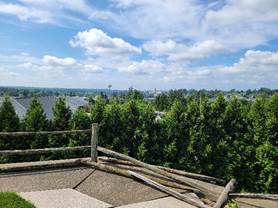
Figure 1: View of the Somerset, PA courthouse from an old Georgian Estate now part of a shopping center know as Georgian Place.

Figure 2: Credit to Summer, sign reads “The First Iron Rails”. The old railroad is now an amazing bike path called the Great Allegheny Passage or just the GAP.

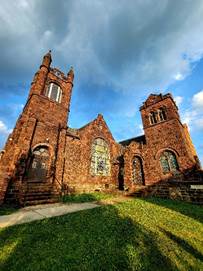
Figure 3: Credit to Summer, Church in between Meyersdale and Berlin, PA

Figure 4: Ft. Necessity, the museum is great, the fort recreation is interesting to see the small scale of such an important event.

The Ringgold Ghost

Ringgold Street, West Hartford, CT

I had an exciting walk the other night. I took one of our dogs, Nugget, for a long, brisk walk around our little city neighborhood just past midnight. We walked down the street and cut through a little wooded area then went down through the park behind it. The illumination was high as the moon was near-full in the sky. Since we’ve been at our flat on Oakwood Street, we often scout the area on walks.

The park stretches into a large grassy area right past the little woods. The grass in the park rolls for a spell to the end of a cul-de-sac that ends at a street named Ringgold. On Ringgold there is a cemetery, I’ve walked by it few times now, mostly in the day, and a couple of times past sunset. I hadn’t made it down on one of my night patrols yet.

Ringgold is a quiet street. It starts three or four blocks up from the cul-de-sac at a T intersection at Park Road which connects the main areas of West Hartford and Hartford proper. Park Road is only busy during business hours. On one side of Ringgold starting at the T intersection is a small city bank, two or three blocks of a quiet condominium community, a small street leading to a neighborhood of mostly three-story multi-flat homes, then a few well-kept old homes with lovely lawns, then ends at the cul-de-sac attached to the large grassy park.

On the other side of Ringold, across the street from the bank is an older still well-kept home. Down much that side of Ringgold the rest of the land is fenced off, like it and the house are one property. It’s an odd tract of land in the populated eastern parts of West Hartford. The space is well maintained but still retains a sense of old to it, like it remembers wilder days before the encroachment of city and suburb. Most of the land is a seasonally dry watershed with overgrown trees near a center drainage basin, like an old creek.

Near the basin grows one of the most beautiful willow trees I’ve ever seen. A few days earlier I properly introduced my son to the willow on one of our walks. I haven’t met a Willow of note since my childhood, I was excited to show him how cool the shaggy trees can be. We snuck through an opening in the fenceline to see what it felt like under its thick canopy of wisps. It was worth a little trespassing, it was safe. We snuck in through a gap in the chainlink where the property belonging to the house’s fence stops and a different one surrounding the cemetery begins. In a fenced area about a block wide, lies an old, unmarked cemetery. Its gravestones face toward the watershed basin away from view from Ringgold Street.

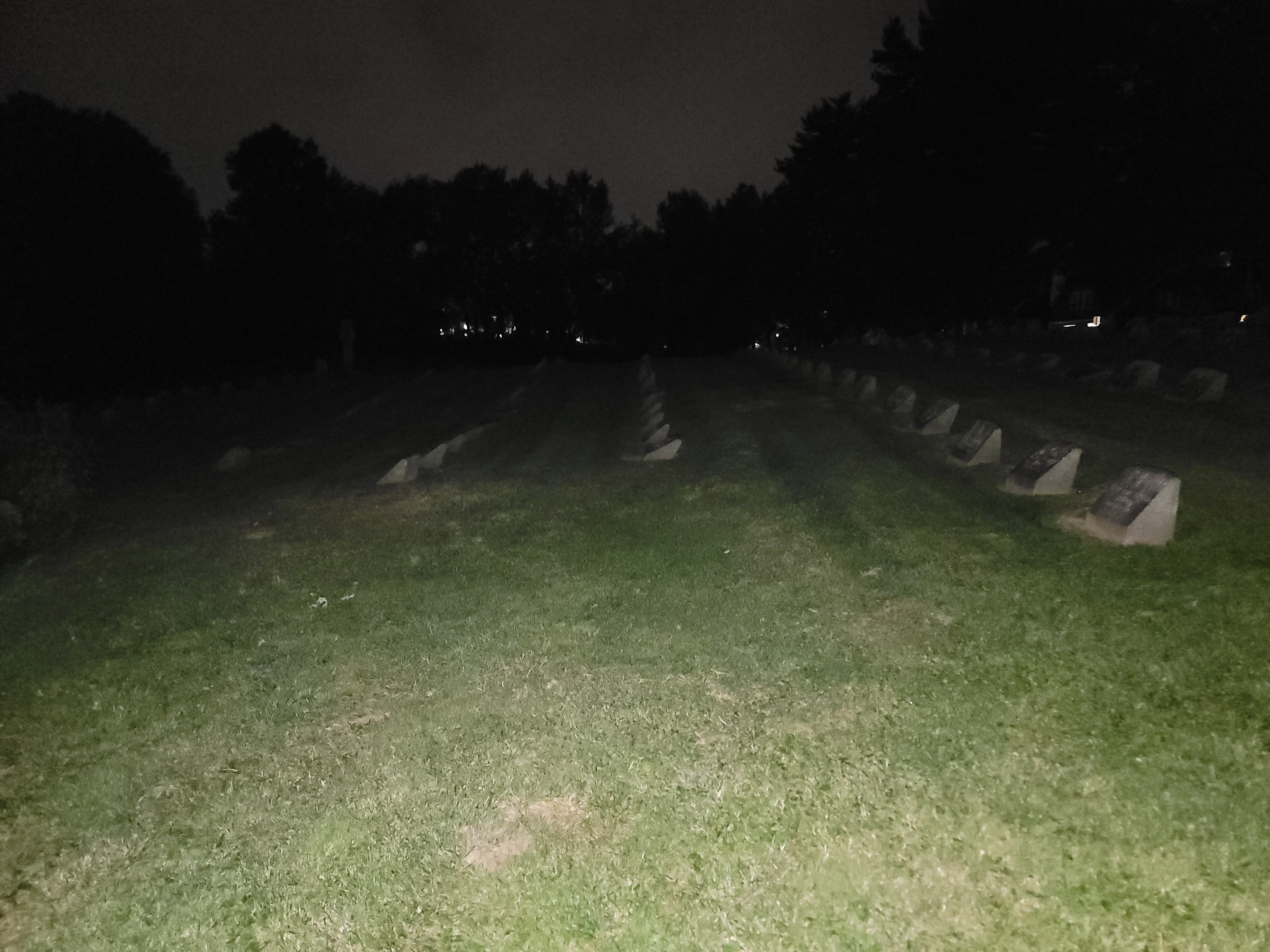
The cemetery is closely manicured, just grass and gravestones. At the center of the formation of fifty or so white stone grave markers is a tall statue of a cross. The gate to enter the cemetery is locked up without away to easily sneak in without jumping the fence. In-between the cemetery on the cul-de-sac next to the park is a small, deeply overgrown tract of land, its trees and plants look defensive and unwelcoming. Next to that is the cul-de-sac, then the grass that flows up a tall hill into the park I like to stride.

Nugget was behaving in a way I appreciated. He was alert but not overly curious, just the way I like my little patrols to go. With Dax, our older pup, I used to be able to walk around with him off the leash. We were a team and we acted as extensions of that team. I felt like Nugget and I were moving as a team, like we were using each other’s senses to detect and respond to the night around us. He’s a good pup. When we’re in tune, he’s a lot of fun to get to be around.

We moved through the park onto the cul-de-sac. I like to stay on the side with the cemetery. There isn’t a sidewalk on that side but I like to be off on my own. Doesn’t hurt that the dogs can get a good sniff of interesting things and they don’t piss on pretty landscaping.

The cemetery seemed still even though the nighttime critters were all a holler on the humid August air. All the stone was vibrant white under the Moon’s clear shine, contrasted by the dark lush green on midnight grass. The night blasted a beautiful chaotic harmony of sound. The cemetery always seems quiet, but that night it was the embodiment of stillness. It was nice. Sound all around it but its solitude was like a wall against the night’s noise. Sounds seemed to spill over it from the woods in the watershed basin behind it.

The pup and I began to transition from the fence line that separated the cemetery from the lawn that my kid and I snuck through. We heard gentil footsteps behind us on the other side of the fence. The steps sounded like they were walking on top of the dew saturated grass and walked right through the fence that separated the lawn from the cemetery. The grass didn’t move, but Nuggets ears were tall and probing the night like radar dishes that found an incoming craft. His pointed nose caught as much sense as my eyes.

With nothing there and the night becoming louder, we moved past the cemetery farther down Ringgold toward the bank, the old house, and the busier road. I did what I always do when confronted with nighttime creepies; I took a deep breath, chest out, shoulders square, I kept my senses alert, and I briskly walked to a place I had more control over. We moved down the way across the street toward a brightened area under a yellowed streetlight. The footsteps matched our pace and continued behind us. Nugget’s head was on a swivel but carried on with our walk without a pull.

Moving forward I’d lost track of the feeling of those steps behind me. We continued to walk until we got under the streetlight. I brought a joint with me. I lit it up, took a deep drag, and took a nice long look around. Nugget took a shit in a little bit grass on the further edge of the cast light from above. I bagged Nuggets business up for disposal and we made our way back home, down Park Road and back toward Oakwood Street.

Weird feeling man. As creepy as the experience was, when I no longer heard the steps, I immediately missed them. I longed for the anticipation I felt in my bones caused by that weird moment in an otherwise normal experience.  Existential realization momentarily manifested and disappeared with the footfalls of ghosts. Real or imagined but rawly felt, none the less. Night creepies can make a normal walk feel exciting. I bet New England is super creepy in the winter. I look forward to experiencing it someday.

Addendum.

My Mom and Aunt Mary came to stay with us. I told them about the Ringgold experience. My Aunt told me she “bet dollars to doughnuts” that the cemetery was part of an old church. Sure, enough I added new search parameters to my investigation, and it is the cemetery for a convent that has been recently sold and renovated into apartment housing. I should’ve remembered my history training instead of relying on google-fu.

Lessons:

Be bold, be brave, have a plan for escape.

Take your camera and use it. The pictures you take are yours and not copyrighted by someone else.

Trust your training (experience) and try to apply it where ever you can.

Links:

Article about the nunnery becoming apartments.

https://www.ctpublic.org/news/2023-10-25/hundreds-of-west-hartford-apartments-open-on-nunnery-grounds

The order of nuns who use to run the site. They seem like cool people, the Sisters of the Neighborhood, trying to help people where they are.

https://catholicarchives.ie/index.php/sisters-of-saint-joseph-chambery

Corner of Ringold and Park, go south on Ringgold to Tract 40 that is the cemetery. Don’t forget to use digitized public records.

On Melancholy by Hans Scholl

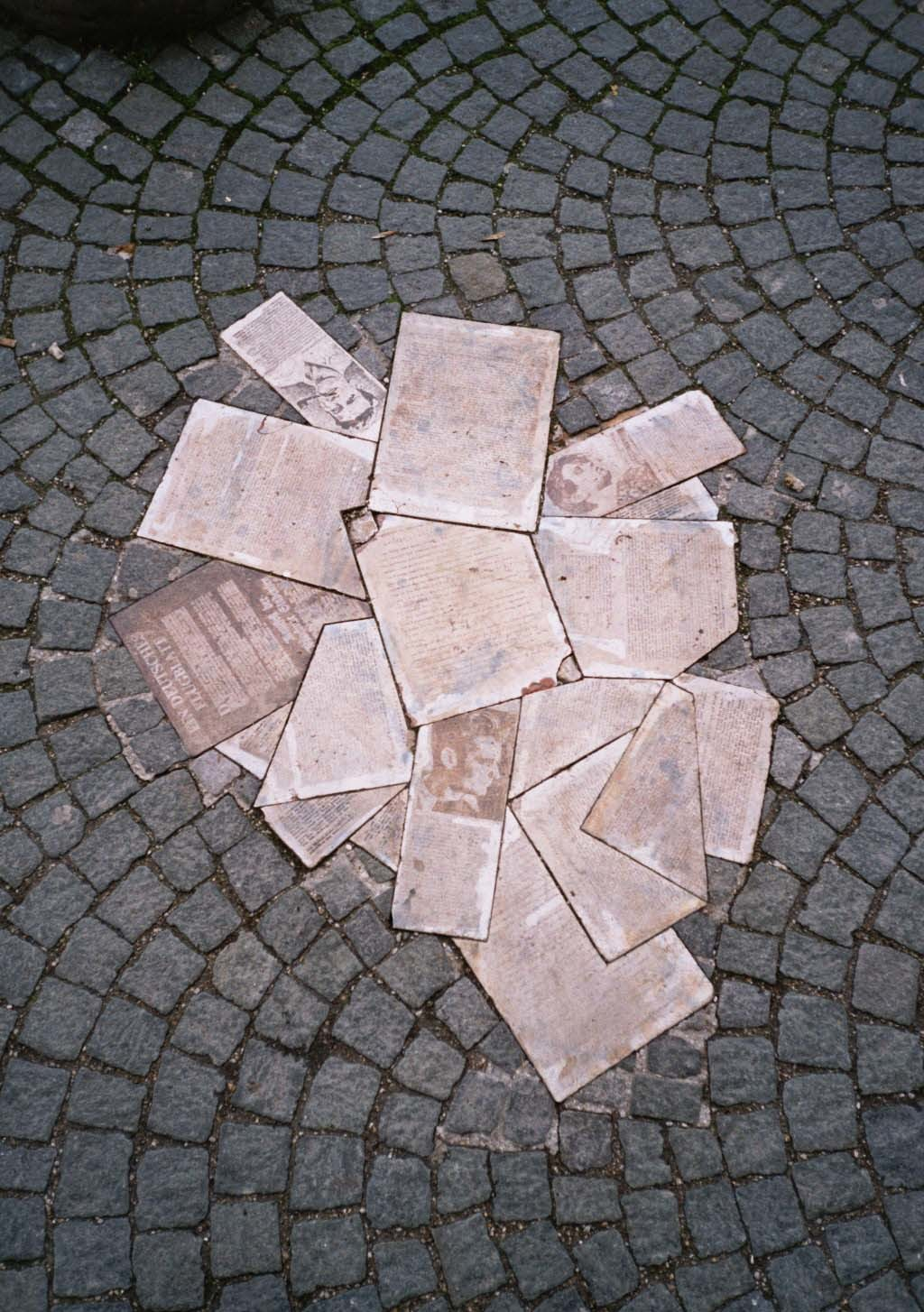
I wrote a paper for my MA on antifascist resistance to Nazi rule by German youth looking specifically at a group of young people called The White Rose. I came across this while reading Nazi resistor Hans Scholl journal, found in the collection of journal and letters from Hans and Sophie Scholl titled At the Heart of the White Rose, on page 252. I could not find a copy online, so I transcribed this entry from his journal here.

A monument to the White Rose in Munich. From: https://en.wikipedia.org/wiki/White_Rose

On Melancholy –

It isn’t melancholy that drives a man to suicide. By the time he’s ready to surrender by engaging in a last, monstrous act of self-destruction, melancholy has entirely deserted him, because melancholy was insufficient to restrain him. The melancholy man ceases to act altogether. He’s chained to the immense and unfathomable depth of his own soul by a hundred anchors, so to speak, and every tempest rages over him unnoticed. Melancholy is both things at once, the spiritual abyss and the anchors that keep him there – indeed, it could be said that the man himself is both, one being inseparable from the other. The more unfathomable the abyss, the more his melancholy weighs. And here we meet a paradox that instills fear and brings the average person out in a sweat: The man whose soul grows steadily calmer as the storm rises, until it finally attains an outward state of deathly repose, it is truly melancholy, truly great and profound. His average, superficial counterpart merely drifts, tosses hither and thither, and his soul bobs on the surface like a rowboat on the waves.

But not every great man is capable of waiting so steadfastly, trusting in the immense force that holds him in place. Unwilling to return to the shallows, he aspires to penetrate his own depths and go farther. Violently, with an effort that passes all understanding, he smashes his soul and acts once more. When that happens, destruction and deliverance are near neighbors.

Russia alters its appearance just when you least expect it. It’s as peevish as a child and as capricious as an old maid.

In quest of a comparison, you find, after three grey, rainy, miserable days in the dim half-light of the dugout, that Russia most resembles an old man forever gazing wearily at the same corner of his death, waiting calmly and patiently for the end that must surely come. And then, contrary to all expectations, the wall of clouds, overhead parts and the dawn light peeps forth, fresh as a baby, and within a few hours the sky is blue all over. A gentle breeze stirs the birch trees. Like pearls, a thousand droplets glisten on the leaves once more and are promptly, heedlessly flung to the ground.

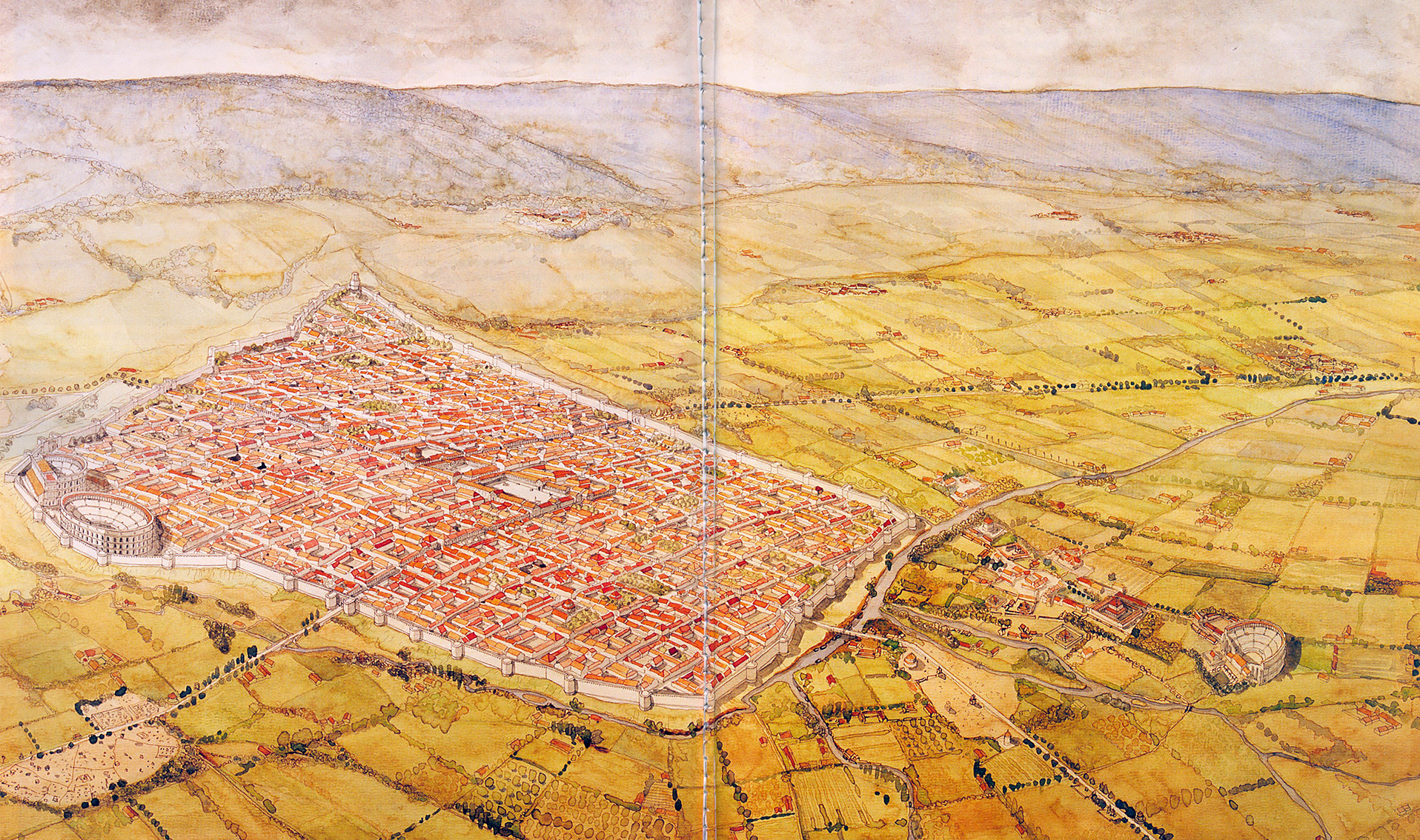
Augustodunum

Augustodunum was founded by the Roman emperor Augustus to serve as the tribal capital of the Aedui people, France

I love looking at maps. I find myself entranced by them, human infrastructure, art, patterns, visual history, what’s not to love?

I was looking at one of Augustodunum and it made me think that the city its self must have been a significant investment in land, labor, capital, technology, ect.to make that town happen in roman times. A little Rome in a foreign land for a foreign people and a hand full of Roman entrepreneurs and authoritarians. The changes the city was part of and home to had and impact that lasted untold generations on that area and history.

I found myself staring at the walls that surrounded the town and wondered how dangerous it must have been to identify as or with the Romans in the area around the city, especially outside the walls or in the surrounding boonies. Kind of like the Baghdad Green Zone or our little fire bases that dot Afghanistan. It must be dangerous to work with what’s perceived as the empire out in the sticks where the empire only rules when it is physically present.

I wonder who will occupy the walls and the mounds of mud when we have left in all the places we occupy. I wonder what they will think of us, I wonder what history will say. Will we be spoken of like Rome in myth and power, rises and falls, wars and control or will those who come after have other things to whisper and different things to say about us? How will we be remembered, what will out legacy be?