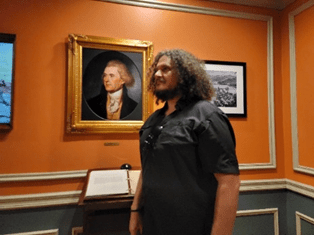
Nomadication #2 – Road Trippin’ with SMG

It’s been a long time since I’ve been above the Mason-Dixon Line. My family and I stayed the month of July 2025 right north of it. We crossed the line regularly during the month we stayed in a rental house in-between the little towns of Meyersdale and Berlin, PA. The house is in Somerset County, a rural area hours away from any big city. At first glance it’s not a likely place where traveling Texans would lay their heads for a month. When our travels came up in conversation folk tend to ask along the lines of, “why are you staying here of all places?” Summer and I learned the easiest explanation is, “we kinda threw a dart at a map and landed here.”

            The longer explanation is that throughout our trip we’ve booked places we could afford along with the mortgage we are trying to unload back in Texas. We looked at rentals offering a reasonable monthly rate in an area we kind of want to stay and narrow in on something that’s at a price range that seems reasonable. Our stay in Somerset County was a little different though. My last couple of semesters in grad school, before we started this cross-country jaunt, I made a point to meet with my professors. One of the questions I would ask was, “if you could go anywhere in the U.S. to stay for a month where would you go?” My architectural history professor Peter Dedek mentioned Cumberland, Maryland due to its interesting architecture.

                        The area around Cumberland seemed like a reasonable place to start an extended nomadic adventure. We found our rental house in Somerset County, Pennsylvania about 35 minutes north of Cumberland across the Mason-Dixon.

            Intellectually, I understood that Appalachia stretched beyond the southern United States and into the northeast. I heard the Appalachians were, during the time of Pangea, the same range as the Highlands of Scotland and the Atlas Mountains of Morrocco. I could see on a map, the Catskills of New York and the Green Mountains of Vermont were part of the larger Appalachian range. I just never thought of the mountains north of West Viginia as the same mountains that my ancestors moved out of in covered wagons, leaving Tennessee as they pushed into and colonized East Texas. But Appalachia they are, and we connected with their ancient beauty over the next few months from different vantages. The mountains in the chain we stayed near in Pennsylvania are called the Alleghenies. The name evokes in my mind visuals from Allan Eckert’s book The Frontiersmen.

            The area we first called temporary home is referred to, tongue-in-cheek by the locals, as “Tri-State.” Their Tri-state is where the borders of Pennsylvania, Maryland, and West Virginia meet. That land is historically and culturally rich and we had a great time for that month of July.

            The house we rented is on a farm in a valley between two ridges of the Allegheny Mountains in an area called the Brothersvalley Township in Somerset County, Pennsylvania. The view from the front porch is a sight to see. It’s a lovely area, rolling hills of land under harvest, covered in crops in the colors of July. Every shade of green, gold, and violet in fields arrayed in lines and rectangles. Colorful hills of cropland stretch out into dark greens and browns of forested tall ridges capped by a dozen or so towering wind turbines, their slow cycles harvesting wind with massive blades that cut silently through low clouds and fogs that roll into the little valley that farming families call home.

            The whole of this Tri-state was once very active in coal mining and lumber. Apparently hills were taller and forests fuller before both were hacked away to fuel industrialization. I could picture the land from times before in the pockets of preserved forests and the names of roads and locations. One example was the Belin Plank Road, I was informed by a local history buff that the road was once actually made of wooden planks. The former wealth of the land is apparent in many of the old buildings that stand in honorable and steadfast architectural styles that vary through a limited stylistic era, before industry exhausted the area and went further west in search of fuel to fill its endless hunger. Churches and some of the other important town buildings are cared for and looked after, even through the toughest times.

            Many of the houses were old but maintained. The small towns are well kept and driving from one town to another you will spot lonely, beautiful churches still used by farmers on Sundays, surrounded by seemingly endless fields. On HGTV they talk of houses with “good bones,” the towns of Somerset County have good bones in spades. Their days of affluence when the stone churches and the brick homes were built are behind them, the future seemed caught in some space between hopeful and uncertain as we traversed the roads and crisscrossed up and down the Mason-Dixon.

            One historic feature that dominates the history of the area is the National Highway. Now, mostly two-lane thing, which stretches from Cumberland, MD to Pittsburg, PA and beyond, was once a path cut through a dense forest intended to get a band of British troops to siege a French fort. It was carved out by humans under the command of long dead generals in a war that some claim to be the first global conflict. Summer and I had our sixteenth anniversary out on the National Road, or Braddock’s Road, or the place of George Washington’s early speculative investments[1], however you like. Before dinner we visited Fort Necessity National Battlefield where a young Colonel George Washington fought and lost, his soldiers firing out the first shots of the Seven Years War.

            There are old inns that dot the old road that have been giving quarter, rest, and ale to wary travelers since the road became “pacified” through investment of luminaries like Washington who remembered the site of his first fame, or infamy[2], and marked the road he helped carve out for future investments. We had dinner as a family for our anniversary in one of the inns, apply named The Old Stone Inn. It was the kind of place you knew was haunted, not just by the ghosts of history but if the waitresses and workers are to be trusted, by spirits that wish to remain in the consciousness of those who still alive and kicking.

            Old bridges, ancient toll booths, grave sites, and unquieted memories dot the landscape everywhere you look around these parts. It is a place where the past is still very much alive and the future is something that is distant and to be weary of.

            In the next installment, I will talk a bit more about the region, the sites we visited, and the people we met. From visiting not one, but two, homes designed by Frank Llyod Wright, making an unexpected pilgrimage to the Flight 93 Memorial, Cumberland, Frostburg, Sommerset, the land of diners, quilt patterns, battlefields, Confederate flags, and the welcoming flicker of candles in the windows of Pennsylvania Dutch homes.


[1] Washington was tasked to help carve a road out of the wilderness, straight through from Cumberland to what is now Pittsburg. It was a densely forested region at the time. During his time in that once wilderness as a young British officer, he took note of the rich opportunities that lay not just in the region but along such a potentially profitable road connecting the headwaters of the Potomac in Cumberland to the Ohio River Valley. His lobbying and monetary speculation are paramount to that road becoming the first highway paid for and maintained, for a while, by the national government. It is a fascinating history and one which the Fort Necessity National Battlefield does an incredible job of interpreting. Worth a stop, considering it is right down the road from Wright’s Fallingwater.

[2] There is a great controversary of Washington’s assassination of a French officer sparking the first shots of the Seven Years War that is worth further investigation for any history hounds out there.  
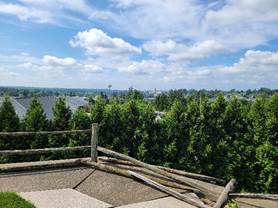
Figure 1: View of the Somerset, PA courthouse from an old Georgian Estate now part of a shopping center know as Georgian Place.

Figure 2: Credit to Summer, sign reads “The First Iron Rails”. The old railroad is now an amazing bike path called the Great Allegheny Passage or just the GAP.
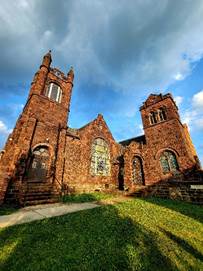
Figure 3: Credit to Summer, Church in between Meyersdale and Berlin, PA

Figure 4: Ft. Necessity, the museum is great, the fort recreation is interesting to see the small scale of such an important event.
On Melancholy by Hans Scholl

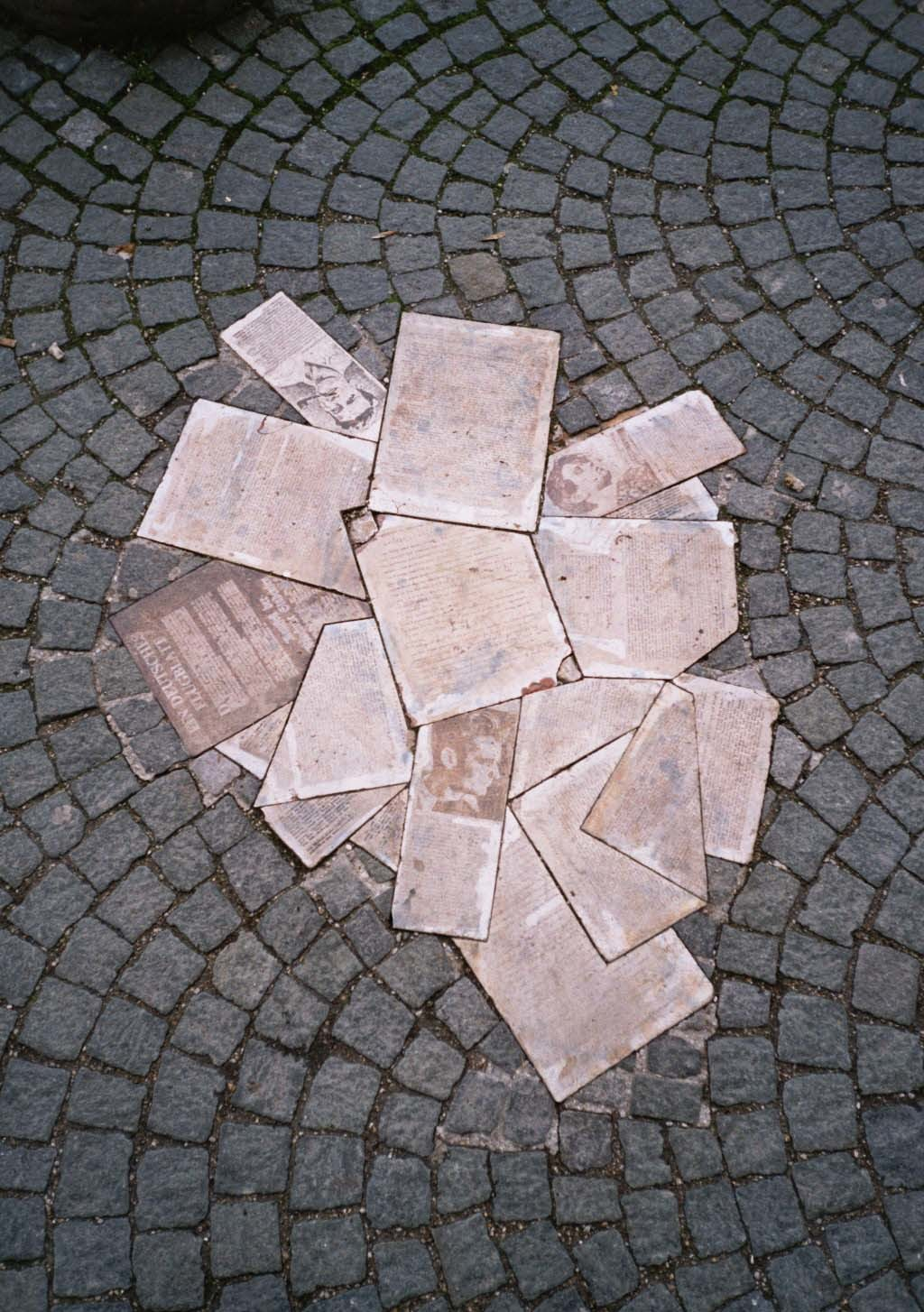
I wrote a paper for my MA on antifascist resistance to Nazi rule by German youth looking specifically at a group of young people called The White Rose. I came across this while reading Nazi resistor Hans Scholl journal, found in the collection of journal and letters from Hans and Sophie Scholl titled At the Heart of the White Rose, on page 252. I could not find a copy online, so I transcribed this entry from his journal here.

A monument to the White Rose in Munich. From: https://en.wikipedia.org/wiki/White_Rose

On Melancholy –

It isn’t melancholy that drives a man to suicide. By the time he’s ready to surrender by engaging in a last, monstrous act of self-destruction, melancholy has entirely deserted him, because melancholy was insufficient to restrain him. The melancholy man ceases to act altogether. He’s chained to the immense and unfathomable depth of his own soul by a hundred anchors, so to speak, and every tempest rages over him unnoticed. Melancholy is both things at once, the spiritual abyss and the anchors that keep him there – indeed, it could be said that the man himself is both, one being inseparable from the other. The more unfathomable the abyss, the more his melancholy weighs. And here we meet a paradox that instills fear and brings the average person out in a sweat: The man whose soul grows steadily calmer as the storm rises, until it finally attains an outward state of deathly repose, it is truly melancholy, truly great and profound. His average, superficial counterpart merely drifts, tosses hither and thither, and his soul bobs on the surface like a rowboat on the waves.

But not every great man is capable of waiting so steadfastly, trusting in the immense force that holds him in place. Unwilling to return to the shallows, he aspires to penetrate his own depths and go farther. Violently, with an effort that passes all understanding, he smashes his soul and acts once more. When that happens, destruction and deliverance are near neighbors.

Russia alters its appearance just when you least expect it. It’s as peevish as a child and as capricious as an old maid.

In quest of a comparison, you find, after three grey, rainy, miserable days in the dim half-light of the dugout, that Russia most resembles an old man forever gazing wearily at the same corner of his death, waiting calmly and patiently for the end that must surely come. And then, contrary to all expectations, the wall of clouds, overhead parts and the dawn light peeps forth, fresh as a baby, and within a few hours the sky is blue all over. A gentle breeze stirs the birch trees. Like pearls, a thousand droplets glisten on the leaves once more and are promptly, heedlessly flung to the ground.

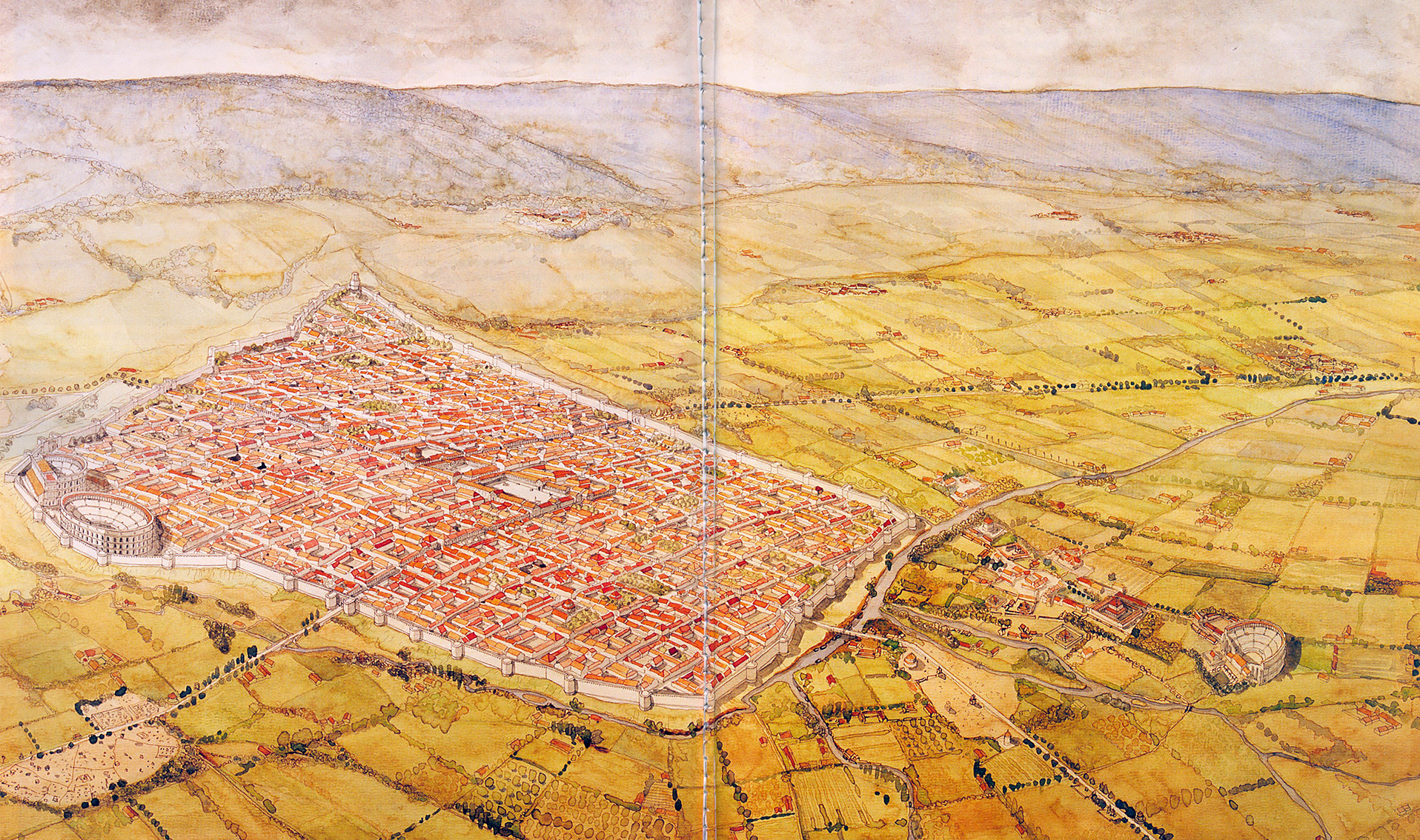
Augustodunum

Augustodunum was founded by the Roman emperor Augustus to serve as the tribal capital of the Aedui people, France

I love looking at maps. I find myself entranced by them, human infrastructure, art, patterns, visual history, what’s not to love?

I was looking at one of Augustodunum and it made me think that the city its self must have been a significant investment in land, labor, capital, technology, ect.to make that town happen in roman times. A little Rome in a foreign land for a foreign people and a hand full of Roman entrepreneurs and authoritarians. The changes the city was part of and home to had and impact that lasted untold generations on that area and history.

I found myself staring at the walls that surrounded the town and wondered how dangerous it must have been to identify as or with the Romans in the area around the city, especially outside the walls or in the surrounding boonies. Kind of like the Baghdad Green Zone or our little fire bases that dot Afghanistan. It must be dangerous to work with what’s perceived as the empire out in the sticks where the empire only rules when it is physically present.

I wonder who will occupy the walls and the mounds of mud when we have left in all the places we occupy. I wonder what they will think of us, I wonder what history will say. Will we be spoken of like Rome in myth and power, rises and falls, wars and control or will those who come after have other things to whisper and different things to say about us? How will we be remembered, what will out legacy be?

Flags

All flags carry with them the shame and pride, glory and depravity carried by those individuals who marched under the flag’s shadows.
Let us not have flags represent who we are but let our deeds speak for themselves.
There is no nation, nor kingdom, nor belief or religion that’s not gilded in gold by the good they accomplished and covered in the blood of its past. All we create are human institutions and that in itself defines them as flawed.

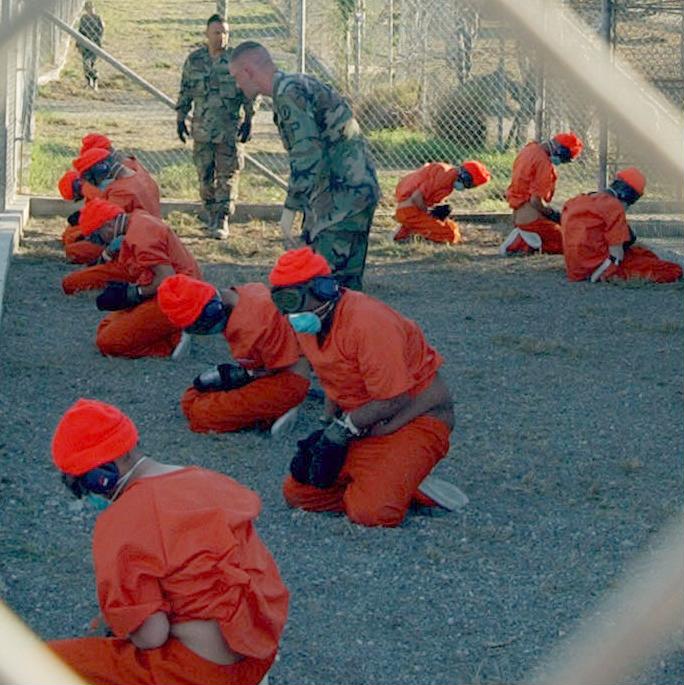
Black Sites and GITMO

Picture from Wikipedia

Picture from Wikipedia

I’ve been going through articles on the UC Davis Guantanamo Testimonials Project and reading about what GITMO detainees went through. It is a project dedicated to collecting the testimonies of those who have been involved with dentition at Guantanamo Bay in their own words. I’m trying to learn about something that terrifies me, I want to stop reading the articles but I feel drawn into the testimonies of prisoners and jailers alike and I want to bear witness to the history they have to tell.

One of the testimonies was about an innocent man – there are a lot about innocent people, just look at the list of names of the detained and see how many have been released – but this guy was snatched up and tortured for eight fucking years. Eight years of his life were taken away, by a government of separate sovereignty than his own and sent to a faraway land (if this happened to US citizens on the regular we’d be at war or we’d at least send in Bill Clinton). This guy is a Kuwaiti and elements of the US government hears about him and somehow suspects him of terrorism, snatches him off the street, throws him in jail, and then sends him to Guantanamo Bay Cuba to be tortured for 8 years of his life.

Shit’s brutal.

A court heard his case in the US and the judge said that there wasn’t enough evidence to have him locked up in the first place, much less put him into the most notorious High Value Target (HVT) detention facilities ran by the most powerful empire (or Super Power what ever language you prefer) in the world to be tortured and detained for almost a decade. It’s scary to think about how much power over the lives of others some people have. And there are tons of article similar to this one about lots of different people on the site, not just detainees but soldiers and civilian alike all confirming what went on, what goes on there.

This terrifies me and it’s not just the idea of being locked up and tortured for being nothing more than, in a lot of cases of the detainees, being in the wrong place at the wrong time. It’s the understanding that there’s an entity in the world that claims to represent my interests that’s powerful enough to put people from all over the world anywhere they want and treat them with torture to gain information. GITMO isn’t a just a jail it’s a processing center. It’s a place where you go if the US really suspects you of terrorism. It is a processing center that controls your life until it determines whether or not it’s through with you. The places you go if the US really really thinks your guilty – guilt determined by means that don’t work (aka torture) – are called black sites, black because they’ll be redacted with black ink as soon as the printer ink dries. These are dark holes officials in the US government throw people to be tortured away from the peering eyes of its own citizenry and the world. All without a hearing, all based on the principle of guilty until proven innocent veiled in obscure readings of the law, it freaks me out.

I’m so thankful I am not any of these people, the guards, the interrogators, but especially the ‘detainees’. We should call them what they really are, victims of a powerful faceless system that represents a small segment of the human population and it has the power to determine who is an enemy by a secret and ever changing set of criteria with ‘no meaningful insight’.

These are the stories I’m really afraid of. When I got home from Afghanistan I remember telling my mom, “When I was younger, I remember being scared of ghosts and demons, now that I’m home I know there are scarier things that go bump in the night, like a human being with an RPG.” Yeah and big-damn governments that could chose to call you an enemy because you aren’t the way it thinks you should be.

Just a side note, here is a video of Christopher Hitchens agreeing to be water boarded. Very informative for those who have never seen what water boarding is really like.